

A visual journal for personal mapping
A visual journal, in the personal mapping space, is a personal noticing container - a physical place where you gather raw material that may later become your own personal maps.
If you know anything about my work, you will know that paying attention is at the heart of it. This week’s Sunday Pocket Note is once again different and is the first in a series about visual journals as containers for personal noticing.
I thought I’d pop in here and talk more about visual journaling and specifically visual journals and how they can become containers for gathering the bits and pieces that might one day become personal maps. Quite often, we know that we want to do or try something, but have no idea where to start.
Bryant Del Toro validly points out that one of the reasons we struggle to journal is “that my life is an overwhelmingly broad subject” and suggests that a focused project is a great way to narrow our attention - “constraint is our friend”.
This can be a place to start, with a focused project
A visual journal, in the Mappery space, is a personal noticing container. It is a physical place where you gather raw material that may later become your own personal maps. Or not, as the case may be.
When I talk about keeping a visual journal as part of personal mapping, I’m not talking about beautiful pages in an art journal or about producing something impressive. I’m not talking about following a layout or specific format, using expensive materials or knowing how to draw. I am talking about you creating a place to gather together all the threads that you might decide to or want to pay attention to.
As a personal noticing container this notebook might contain a whole heap of different things: words, images, scraps, lists, questions, diagrams, photographs, tickets, textures, colours, phrases, place names, memory notes, timelines, doodles, copied quotes, symbols, arrows, circles, crossings out or random half-formed thoughts. That list is long, but gives you a sense that nothing is out of bounds. Or it might be simple lists or bullet points. The format is not important, the attention you are giving your life, is.
Whatever you put there belongs there - no explanations needed. Your approach will be something that gives you space to unfold and explore.
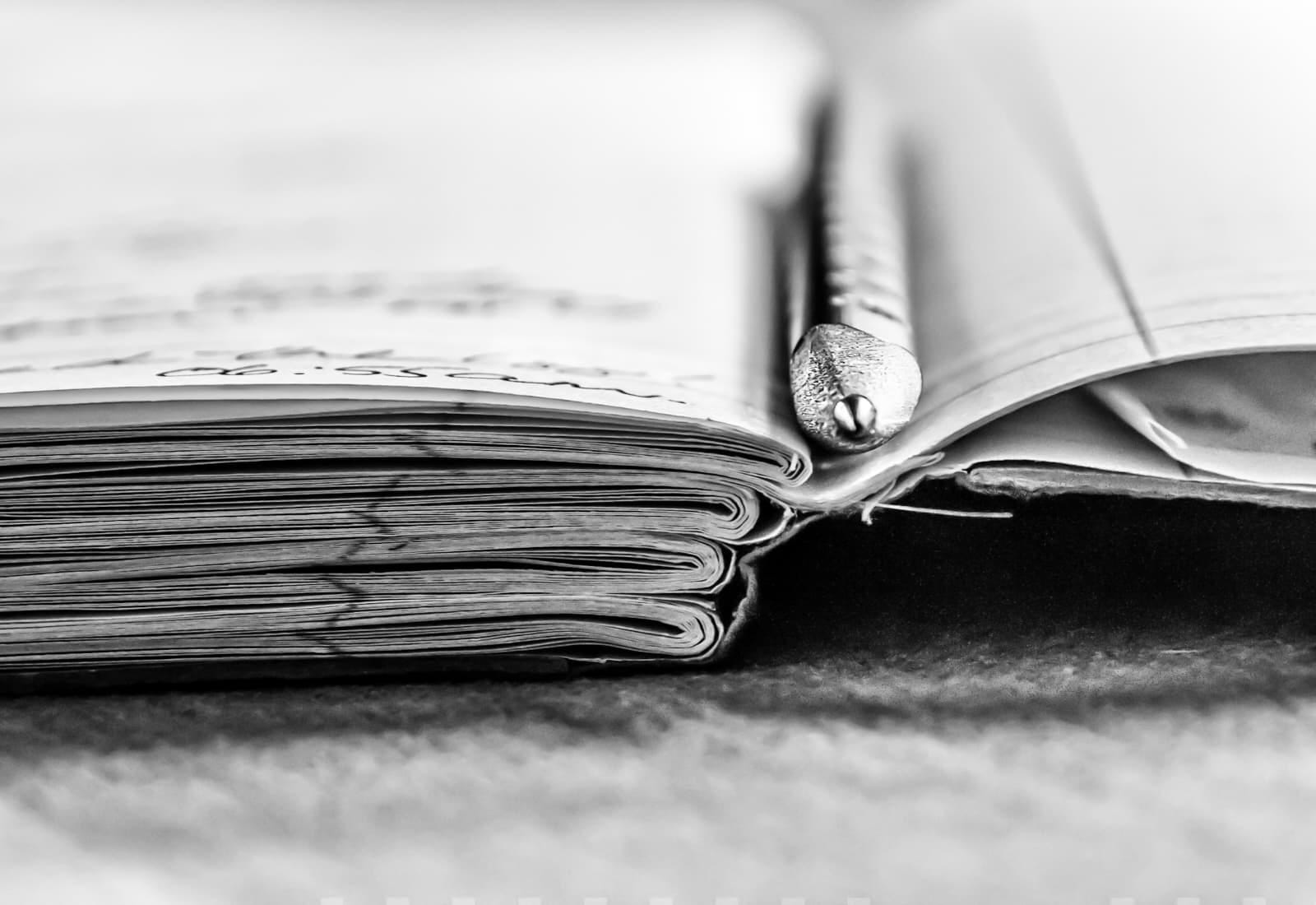
Does the journal need to lead anywhere?
It’s fine if the journal doesn’t lead to anything in particular. You might have no idea about what you want to map or why something keeps catching your attention. The journal is there to give those things a container to exist in before you even think about organising them, understanding them or maybe turning them into a map.
If the journal doesn’t turn into raw material for personal mapping, it is still a valuable resource for noticing what you think about, keep coming back to, avoid, remember, collect and care about - for staying in conversation with your own life.
The whole point of the journal is that it gathers first and maybe the maps emerge later.
Very importantly, the journal can hold the beginnings of many maps, not just one. Maybe a phrase that keeps appearing might belong to a map about identity; a list of things that irritate you might become a map of a transition, a boundary, a pattern or a longing. A photograph, a ticket, a colour or a small drawing might turn out to be a doorway into something you had no idea you were exploring. You get the idea.
A visual journal helps you collect the clues before you know the shape of the map. It lets you begin with attention, rather than certainty and clarity. The journal is the constraint, the thing that allows you to focus.
Giving your journal a name
It’s not important to give your journal a name, but sometimes giving a thing a name, helps us to solidify it in our minds for a particular purpose; to help you understand what it is for. Here are some possible names.
The Gathering Book
The Noticing Book
The Map Material Book
The Clue Book
The Personal Atlas Notebook
The Before-the-Map Book
The Raw Material Book
Call it whatever helps you to use it regularly, to let it become a friend rather than a chore. Remember, the whole point of the journal is that it gathers first and maybe the maps emerge later.
Your turn
If this sounds like something you’re interested in doing, then your first action is to find yourself a notebook. This can be any notebook: one that you already have, a simple school composition book, a pocket notebook. The less fancy the better because then you will not be precious about using it.
Then if you want to, give it a name. Mine, unsurprisingly, is called “The Moodling Book”!
You are ready to start!

Read more

You can support me by signing up for a paid subscription, restacking and sharing my stories and posts. For the price of a coffee, you can also support me through my Buy Me a Coffee page ⬇️

Join me in the Moodling Letter
Every Moodling Letter begins with something I've been noticing. From there, I follow the thread to explore what it reveals about attention, creativity and the way we make sense of our lives, alongside new work from the studio and invitations to exhibitions and workshops.
Sunday Pocket Notes are small reflective postcards: moments of curiosity, insight, and exploration from inside Mappery, with small practices, ideas and prompts you can take into your own visual journal.
Loved this post, Debs. Absolutely agree that a journal or whatever you choose to call it "lets you begin with attention, rather than certainty or clarity."
Generally, I keep a 'book workbook' which contains my all the structural notes, ideas, research material... anything re. the book I'm writing. This is where I also track edits/mistakes... I keep a 'journal' which is kind of 'rough book' - remember those from school? - and this is where I draft out reviews of what I'm reading, ideas for essays and this and that... and I keep a 'field notes' notebook for when I'm out and about, or on holiday etc.
All of these notebooks get messy. I've learned to embrace that, but there was a time when I wouldn't have been able to work unless everything was neat and in order. I've noticed that my workbooks have changed with me, if that makes sense.
When I've finished a big project, save for my 'book workbook', I've got this ritual where I burn pages or whole notebooks, I need to let go of it at that stage and move on. That said, I've several precious notebooks, eg gifts from my husband and I can remove the leather covers and keep those in preparation for a new pad. Meanwhile I wouldn't burn the old pads because I write poetry etc. in them and sometimes paint with watercolours.
I love to write by hand, with a fountain pen if I'm feeling particularly organised, or a pencil... whatever is at hand. When I'm working in the county archives I can only use a pencil of course.
I love digital too, and I'm working on digitising some of my workbooks so, at the end of summer, I can make flip books out of them for my website. A way of keeping things that I might burn, anyway, it's a pretty loose idea at the moment.
Thanks for writing this article, speak soon.