

This piece is part of the “in conversation with my image” series.
For the past twelve years, I’ve sought out the subtle magic found in the overlooked details we often walk past or ignore, because they seem commonplace. I’ve worked hard to let go of pursuing “perfect” shots and instead I’ve embraced the beauty that lies within the small, gritty details that are around us: the whispers of the everyday.
In a recent post I wrote about being a Delight Detective and how this helps me “break the rules”. Discovering delight starts with tuning into mundane: the world’s hidden layers and details rather than just looking for a polished outcome.
Let’s get into the details of what this looks like. This is really a two part post, so in this part I will talk about expressing myself through detail and how this helps me tune into the mundane. In the next post I’ll talk about recognising that creative attention intuitively begins in my body.
It’s all in the details
Philippa Stanton1 writes that: “really paying attention to everything around you sounds simple, but it actually demands a level of curiosity and observation that most people are not used to exercising. And it takes time”. [Conscious Creativity]
She is right. It is not easy for us to pay attention to what is around us. We are used to burying ourselves in screens of some sort - phones, tablets, laptops or computers, TVs... I know that I used to walk around with my eyes metaphorically closed.
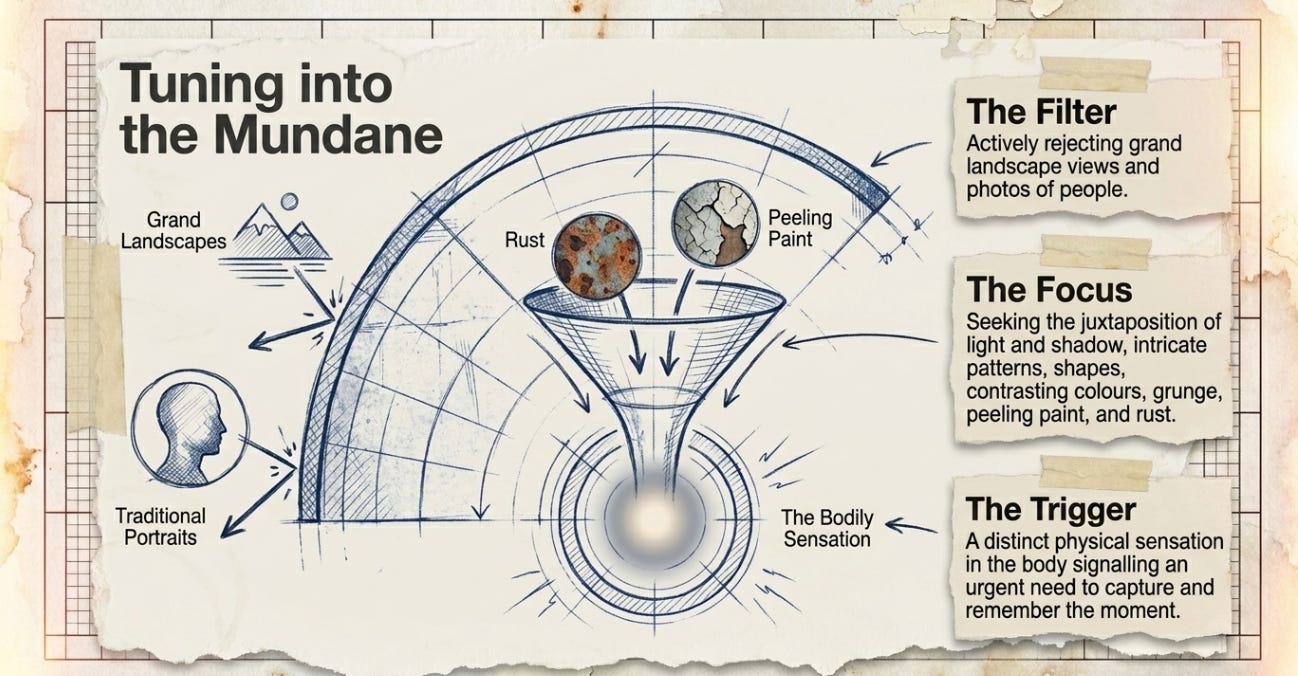
So I pay attention, notice something.
How does that come out in my images through creative practice?
Over time, it has become second nature for me to look for the details in the world around me and create images of these details using a juxtaposition of elements, expressed through the contrast of light and shadow, through contrasting textures and shapes, through filling the frame.
Most of the time, I am looking at the minute details in the environment and landscape around me. I’m seldom looking at the conventional view of a place. I am the person who is on her knees, looking in the opposite direction to everyone else, peering closely at seemingly empty spaces and mundane, perhaps even ugly objects - all in pursuit of detail.
For me as a holistic photographer, the common thread expressed visually in my images is the detail. My photographs and images will generally include some or all of these aspects:
Light / shadow / reflection / contrast
Texture / pattern / decay
Shape / line / form (geometry)
Space / perspective / juxtaposition
Shapes, lines, shadow, texture, pattern, reflection - that’s what I’m all about!
My visual voice is detail. I express myself through detail.
But if my ‘visual voice is detail’, what does that really mean for me? For you?
The details that I capture in my immediate surroundings are both contextual and abstract at the same time. It goes without saying that the details always exist in a bigger context. That means that the image will have a different meaning for you than it does for me. Let me explain.
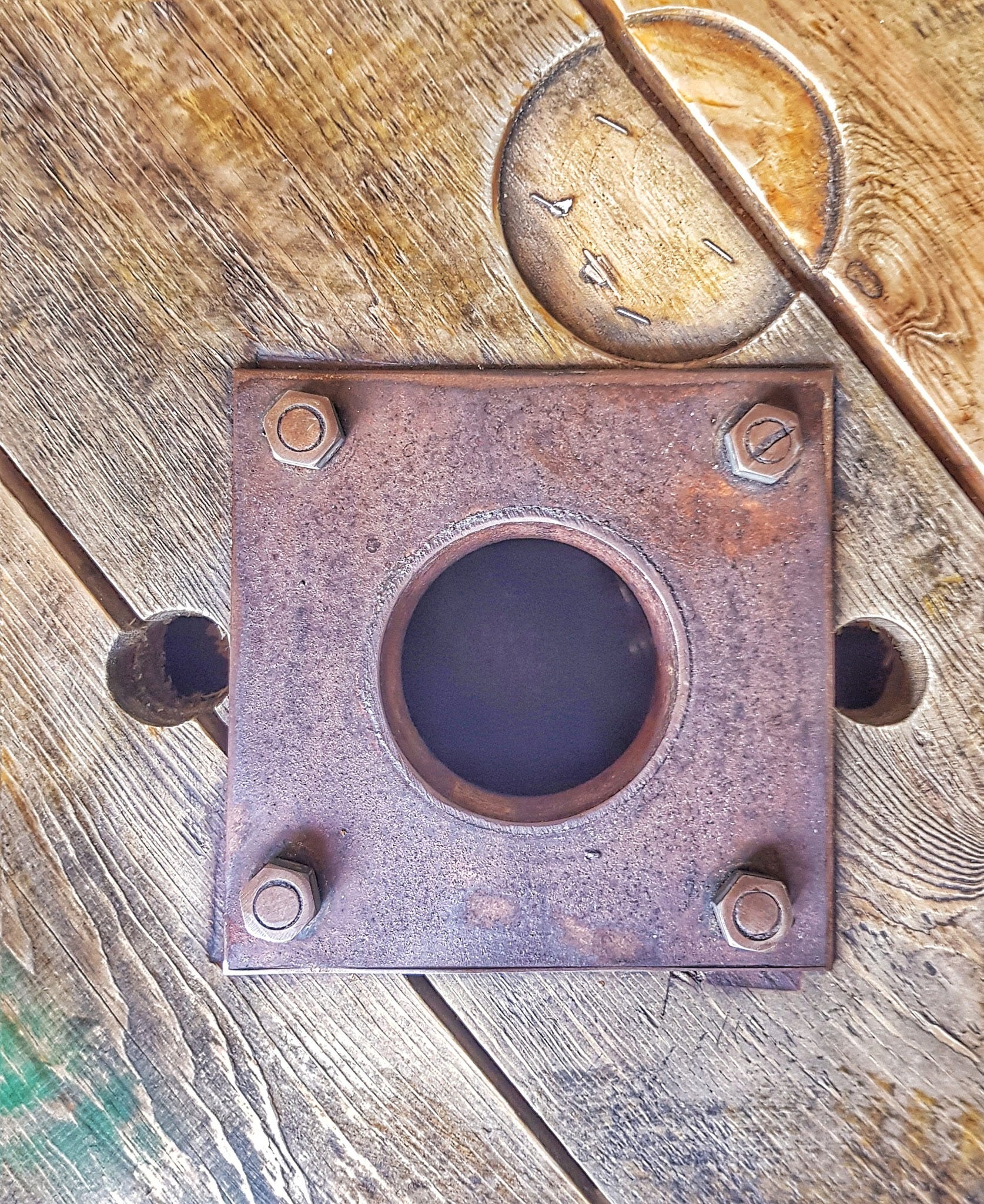
Take a look at this very mundane image composed around circular shapes and parallel lines. I know that the circles are on a coffee table in a favourite coffee shop in the town where I live on the Isle of Wight, in England, and that I was there with my son having iced coffee and bubble waffles.
You don’t. So for you they are an abstraction - its a collection of shapes and lines. You may resonate with it, you may not. If I hadn’t told you about the context, you wouldn’t know they’re part of a table - you’d see wood, shapes, textures and composition.
I see the context and can recall the related memory. I have a recognisable anchor and a different response to the image than you do.
Small details have no recognisable anchor
This is the beauty of details; there is not always a recognisable anchor. This leaves you free to interpret what you see in your own way. Bigger views, cityscapes, landscapes and the like have the tendency to force our brains to “work out where it is” and put a label on it: “Oh, that’s the Eiffel Tower” or “That’s Table Mountain”. With the label comes judgement - all the beliefs, values, experiences that we carry and might attach to that label.
All of this before we have a chance to actually engage with the image itself.
Images based on smaller details do not.
That is why I am attracted to them I guess.
More and more, I’m feeling that true creative practice requires us to disrupt the relentless quest for perfection. Our days are made up of the small things - joys, details, routines, interactions… We need to tune into becoming part of the process, no matter how mundane, and ignite a passionate curiosity about the process itself.
A parting reflection
What small, mundane, weathered detail in your surroundings is asking you to pause, pay attention and recognise it as a piece of magic today?
True discovery happens when you become excited about the simple process of being curious. As you go about your day, take a closer look at the “grunge” beneath your feet. Tune in. Listen to what it whispers to you.

Related pieces
This piece is part of the “in conversation with my image” series. My hope is that this series will encourage others to see creativity as a dynamic force fuelled by curiosity and disruption. By sharing my insights, I aim to inspire others to embrace their creative chaos for discovery and innovation.


Looking for updates from my studio?
The Moodling Letter is where I share what I’m working on - from photography and mixed media pieces to hand-drawn maps - along with invitations to exhibitions, open studio days, and workshops (both in-person and online) where you can experience or take part in the process.
https://www.instagram.com/5ftinf/ and https://www.instagram.com/consciouscreativity/